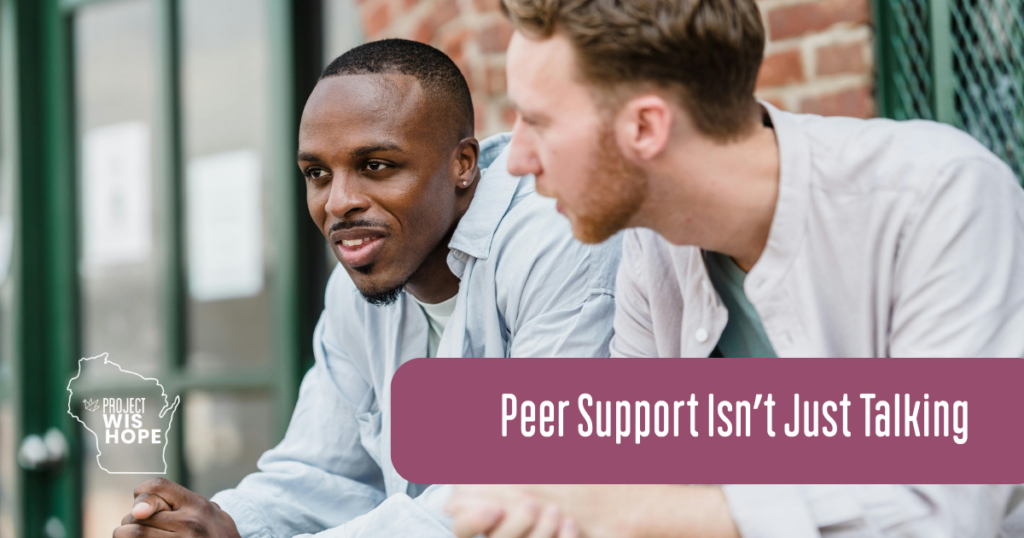
Truth Tuesday. Here’s a myth worth retiring: peer support just means having someone to talk to. It sounds harmless, but it undersells what peer support actually does, and it sets people up for the wrong expectations.
Let’s set the record straight.
Where This Myth Comes From
Peer support does involve conversation. That part’s true. But reducing it to “just talking” makes it sound like a chat with a friend over coffee. Real peer support is something more structured, and more skilled, than that.
A trained peer recovery coach brings lived experience, specific training, and real accountability to the relationship. That’s a different thing than venting to someone who happens to understand addiction.
What Peer Support Actually Includes
A peer recovery coach does more than listen:
- Helps set concrete recovery goals, not just processes feelings about the day
- Recognizes warning signs of relapse or crisis that an untrained friend might miss
- Connects people to real resources — treatment options, meetings, housing, employment support
- Holds steady boundaries, so the relationship stays supportive instead of becoming dependent or enabling
- Draws on lived experience deliberately, using their own recovery story to build trust, not just to relate
None of that happens by accident. It’s trained skill applied through shared experience.

Why the Myth Matters
If peer support gets reduced to “someone to talk to,” people underestimate how much it can offer. They might settle for a supportive friend instead of seeking out an actual peer coach or program. Or they might expect a peer coach to function like a casual friendship, without the structure and accountability that make it effective.
Both mistakes shortchange what peer coaching is built to do.
The Truth
Peer coaching works because it combines genuine understanding with real skill and structure. It’s connection, but it’s connection with a purpose and a method behind it. That combination is what makes it different from just talking, and what makes it work.
For more on what makes peer coaching different from a supportive friendship, our post on community after treatment ends looks at how that structure gets rebuilt in real life. And if you want the full professional standard, SAMHSA’s Core Competencies for Peer Workers lays out exactly what trained peer coaching is built to do. And if you want to connect with a Peer Recovery Coach, one thing you can do is stop in at a community center. Click here for the calendars.