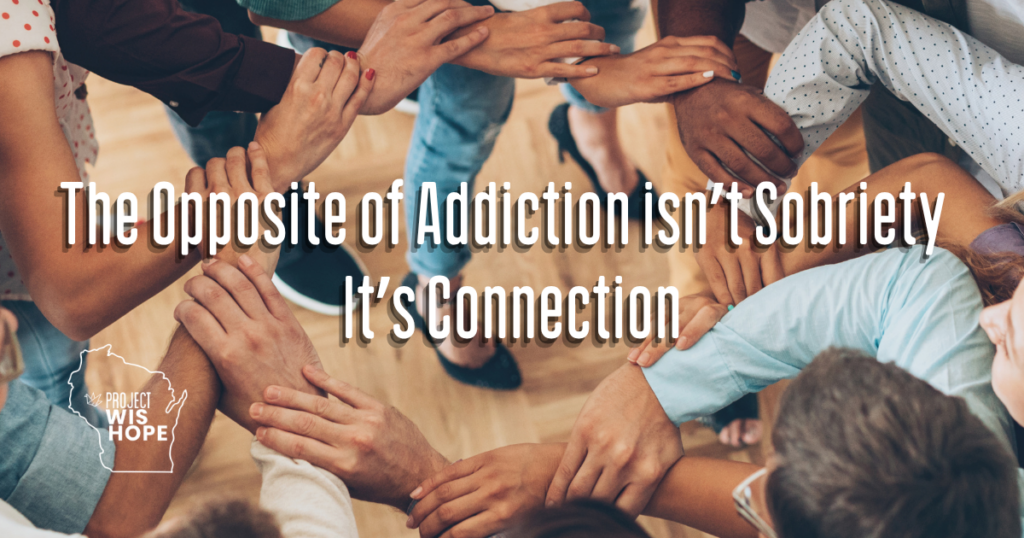
It’s one of the most quoted lines in modern recovery conversations, and for good reason. It flips the whole story on its head. We’re taught to think of addiction as a chemical problem. A substance hijacking a brain. This mantra says something different: that addiction often takes root in isolation, and it loosens its grip in connection.
Let’s actually sit with what that means.
Why This Reframe Matters
If addiction were purely chemical, recovery would just be about getting the substance out of the body. But anyone who’s lived it knows sobriety is only the starting line. The real work — the part that actually holds — happens in relationships. With a sponsor. A therapist. A group. A family member who finally gets an honest conversation instead of another excuse.
Isolation doesn’t just accompany addiction. For a lot of people, it’s part of what fed it in the first place — a way to avoid being seen, being needed, being disappointed in or by someone.
What Connection Actually Rebuilds

This mantra isn’t just poetic. It points at something practical:
- Accountability — someone who notices when you go quiet
- Perspective — people who can see your blind spots when you can’t
- Belonging — a place where you don’t have to explain the whole backstory to be understood
- Purpose — reasons to stay present that exist outside your own head
None of that comes from willpower alone. It comes from people.
The Hard Part: Connection Requires Risk
Here’s what makes this mantra harder to live than to say: connection means being known, and being known means being seen — including the parts you’d rather keep hidden. That’s uncomfortable. It’s a lot easier to isolate than to sit in a room and be honest about a bad week.
But isolation is quiet in a way that feels safe and isn’t. Connection is loud and uncomfortable in a way that actually holds you up.
This Week’s Practice
Reach for connection somewhere it’s easy to avoid:
- Say something true in a meeting instead of the polished version
- Call the person you’ve been meaning to call but keep putting off
- Show up to something in person instead of texting an excuse
The opposite of addiction was never just “not using.” It’s who you let close enough to matter.
What relationship or community has held you up most in recovery? Tell us — connection is worth naming out loud. You can share your story here.
If you or someone you love is struggling with addiction, help is available. Contact us at 844-WIS-HOPE or call SAMHSA’s National Helpline at 1-800-662-4357 (free, confidential, 24/7).