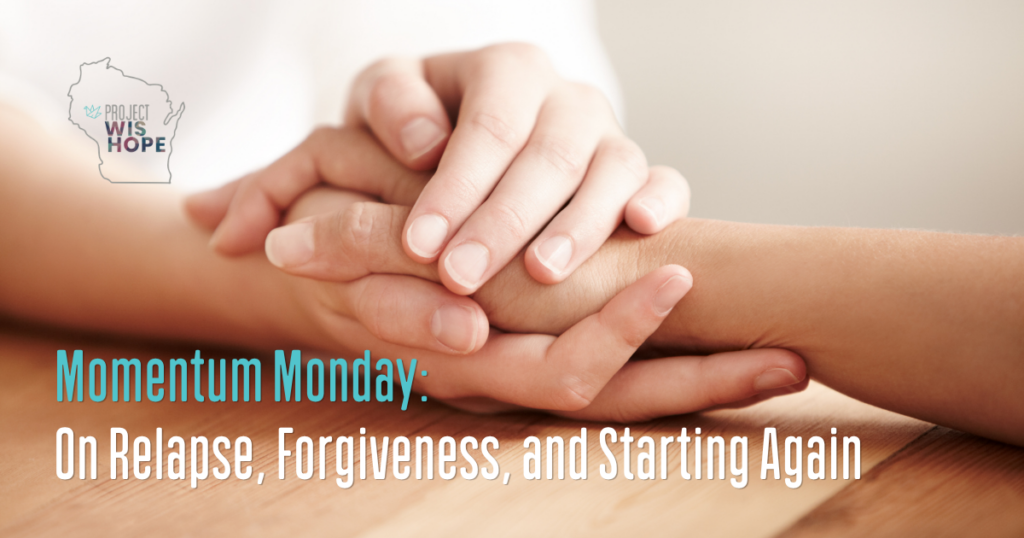
Nobody plans for relapse. And when it happens, the hardest part often isn’t the relapse itself, it’s everything that comes after. The shame, the fear that all your progress is gone, the voice that says you’ve proven something about yourself you can’t undo.
This Monday, let’s talk about what’s actually true.
Relapse Doesn’t Erase What Came Before
the relationships you repaired, or the insight you gained about yourself. None of that disappears because of a single moment. Relapse is a data point, not a verdict.
It’s information. It tells you something. A trigger you didn’t see coming, a support you let lapse, a stressor that got too big before you asked for help. It’s not proof you were never really in recovery to begin with.
Why Forgiveness Has to Come First
You can’t move forward carrying a trial against yourself. Self-forgiveness isn’t about deciding the relapse didn’t matter. It’s about deciding you matter more than the worst moment you just had.
That’s not the same as letting yourself off the hook. It’s refusing to let shame become the thing that keeps you stuck. Shame says I am bad. Guilt says I did something that hurt my progress. Only one of those leaves room for you to actually get back up.
Starting Again After Relapse is Still Progress
Here’s the part that’s easy to forget in the moment: getting back up after a relapse is not starting from zero. You’re not the same person you were the first time you got sober. You know more now. You have more tools now. Starting again with everything you’ve already learned is a completely different starting point than the one you began at.
Every person who’s built lasting recovery has, more often than not, started again at least once. That’s not a footnote to their story. For a lot of people, it’s the chapter where things actually shifted.

What to Do Right Now
If you’re reading this in the middle of a relapse, or right after one:
- Reach out — to a sponsor, a therapist, a peer support group, anyone in your circle who knows the truth
- Get back into structure fast — meetings, appointments, routines — don’t wait until you “feel ready”
- Separate the event from your identity — something happened; it’s not who you are
- Skip the audit for now — there will be time later to understand what led here. Right now, the job is just getting stable again
Momentum Isn’t Ruined. It’s Redirected.
Momentum in recovery was never about a perfect, unbroken line. It’s about direction over time. One hard week doesn’t cancel out months or years of movement forward, It’s just a rough patch inside a much longer story that’s still being written.
You’re allowed to start again. Plenty of people already have, and they’re still here.
If you’ve started again after a relapse, what helped you find your footing? Your story might be exactly what someone else needs to read today. You can SHARE YOUR STORY HERE.
If you or someone you love is struggling with addiction, help is available. Contact us at 844-WIS-HOPE, fill out our pre-screen application here, or call SAMHSA’s National Helpline at 1-800-662-4357 (free, confidential, 24/7).